SAALT Newsletter: April Edition
Language, Creativity, and Innovation: Teaching Beyond the Buzzwords
Voices in Harmony Across SA’s Languages and Beyond: Where Classrooms and Communities Unite Through Shared Wisdom, Creativity, and Innovation
April is a meaningful month for language teachers, authors, and all who value the power of words. As we celebrate World Creativity and Innovation Day (21 April) and International Book and Copyright Day (23 April), we are reminded that language teaching and learning do not happen in classrooms alone; they grow where classrooms and communities meet, where shared wisdom, culture, and experience shape the way we teach and learn languages.

Voices in Harmony
Across Languages and Communities
Across South Africa’s 12 official languages and beyond, the spirit of ubuntu reminds us that language is not only a subject, but a living expression of identity, heritage, and shared humanity. When teachers, learners, families, and communities work together, language education becomes more meaningful, more creative, and more innovative. Stories are shared, knowledge is preserved, and new ideas are born.
International Book and Copyright Day celebrates the importance of books, authors, and intellectual property. It reminds us that books are not only tools for literacy, but gateways to imagination, knowledge, and cultural preservation in all our languages. World Creativity and Innovation Day encourages us to think differently, to embrace new teaching methods, new technologies, and new ways of inspiring learners in a changing world, from chalkboards to chatbots.
As we reflect on these important days, we are reminded that the future of language education lies in collaboration, creativity, and community. When voices come together in harmony across classrooms, communities, and cultures, language teaching is transformed, and learning becomes a shared journey.
Together, across SA’s languages and beyond, let us continue to read to write, to create, to innovate, and to teach in the spirit of ubuntu and shared wisdom.
Save the date: SAALT 2026 Conference
We are thrilled to announce the upcoming 2026 SAALT Conference!
SAALT, in collaboration with Sol Plaatje University, is excited to invite you to its 2026 conference, to be held in Kimberley, Northern Cape, South Africa. Academics, researchers, teachers, and practitioners in the field of language education are warmly invited to submit abstracts for papers, works in progress, and workshops.
DON’T MISS OUT – Submit your abstract today
Creativity and innovation in language teaching: Beyond the buzzwords
By DJ Cloete
The United Nations designated 21 April as World Creativity and Innovation Day to raise awareness of the role of creativity and innovation in all aspects of human development. In some cases this occasion is often accompanied by predictable calls to “think outside the box.” In language education, however, creativity is not a decorative add-on to teaching; it is central to how language itself is learned, negotiated, and ultimately owned by students.
At its core, language learning is an act of pattern recognition and pattern disruption. Students are exposed to linguistic input, from which they abstract rules, structures, and conventions. Yet, true proficiency emerges not when they replicate these patterns flawlessly, but when they begin to manipulate them, that is they are adapting language to new contexts, audiences, and purposes. This is where creativity resides: not in abandoning structure, but in working within and against it.
In academic contexts, this tension becomes particularly visible in the development of voice. Students are often initiated into rigid conventions, which can include argument structures, referencing systems, disciplinary norms and others and these conventions can feel restrictive. However, innovation in teaching lies in reframing these conventions not as constraints, but as resources. When students understand why conventions exist and how they function, they are better positioned to make strategic choices: to emphasise, to nuance, to position themselves in relation to existing knowledge. In other words, creativity in academic writing is not about being unconventional, it is about being purposeful.
This raises an important pedagogical question: what does it mean to teach creatively in a language classroom?
Firstly, it requires a shift from product to process. Traditional approaches often prioritise the final text, in most cases the essay, the summary, the response. A creative approach foregrounds the iterative nature of writing: drafting, feedback, reflection, and revision. Innovation here is not technological (although digital tools can support it), but epistemological. It involves making the invisible processes of thinking, structuring, and meaning-making visible and open to discussion.
Secondly, creativity in language teaching demands that we engage students as meaning-makers rather than passive recipients. This can be achieved through tasks that require transformation rather than reproduction: rewriting texts for different audiences, synthesising multiple sources into a single argument, or critically responding to disciplinary debates. Such activities do not merely test language proficiency, they develop it by situating language within authentic intellectual work.
Thirdly, innovation requires responsiveness to context. In the South African classroom, this includes navigating multilingual realities, diverse educational backgrounds, and varying levels of academic literacy. Creativity, in this sense, is not about novelty for its own sake, but about pedagogical adaptability. Language practitioners often need to find (new) ways to bridge gaps between students’ existing linguistic repertoires and the demands of academic discourse.
Finally, we should be cautious of equating innovation solely with technology. While AI tools, digital platforms, and online resources offer new possibilities, they do not automatically result in better learning. The real innovation lies in how these tools are integrated into pedagogical design. Used thoughtfully, they can support scaffolding, provide immediate feedback, and model disciplinary discourse. Used uncritically, they risk reinforcing superficial engagement with language.
Perhaps the most important takeaway is this: creativity in language teaching is not about making learning more entertaining, it is about making it more meaningful. It is about equipping students not only to use language correctly, but to use it deliberately, critically, and confidently.
In a world where communication is increasingly complex and mediated, this may be the most innovative goal of all.
Call for Papers & SML Conference 2026
The Semmelweis Medical Linguistics Conference (SMLC 2026) will take place on 5–6 June 2026 in Budapest, Hungary, in a hybrid format. This conference series aims, for the fourth time, to bring together researchers, educators, and professionals working in the field of healthcare communication and medical linguistics. The thematic scope includes, among others, patient-centred communication, medical translation and interpreting, terminology, pragmatics, artificial intelligence, metaphors, speech analysis, medical documentation, and languages for specific purposes.
Following the conference, participants will be invited to submit their manuscripts to the Semmelweis Medical Linguistics Investigations series, published by Peter Lang. All submissions will be subjected to peer review and will be automatically considered for indexing.
We warmly encourage you to participate either in person or online. Regular presentations, poster presentations, workshops, as well as general participation are welcome from researchers, educators, and PhD students in linguistics, healthcare, and interdisciplinary fields.
We would be most grateful if you could share our Call for Papers within your professional networks. In addition to traditional academic channels, we kindly invite you to disseminate the call via social media, including Facebook, TikTok, Instagram, and LinkedIn.
For further information, please feel free to contact us or visit the conference website.
We very much hope to welcome you to SMLC 2026 in Budapest.
SAALT Journal:
Special Conference Edition
- Submissions closed Friday, 27 February 2026.
If you have missed the latest issue of the journal, visit the link below to read the articles published in this volume.
Membership Fees for 2025/2026
Becoming a SAALT member offers valuable opportunities for professional growth, networking, and collaboration within the language teaching community. Members gain access to an online profile and a directory of expertise, where they can connect with colleagues who have indicated their willingness to serve as journal article reviewers, external examiners, moderators, and more. This creates a dynamic platform for building partnerships and sharing knowledge. In addition, members enjoy exclusive benefits, including a 20% discount on page fees when publishing in the Journal for Language Teaching (JLT). By joining SAALT, you become part of a vibrant network dedicated to advancing language education and research across South Africa and beyond.
Important notice: At our AGM held during the SAALT Conference 2025 on 30 July 2025 it was decided that SAALT will change its membership dates from 1 January to 31 December 2025 to 1 July 2025 to 30 June 2026. Please note if you have paid your membership fees after 1 July 2025 your membership will be active until 30 June 2026.
We would like to remind everyone to renew their SAALT Membership for 2025/2026. More information is available on our website at https://saalt.org.za/become-a-member/. From this page, you will be able to navigate to our membership levels. The following options are available:
- SAALT Individual Teacher Membership: R250
- SAALT Schools Memberships: R500
- SAALT registered Postgraduate Students: R200
- SAALT Registered Academics/researchers/Other Institutions: R500
After you have made your selection on the following page https://saalt.org.za/membership-levels/ you can choose one of two options.
-
Option 1:
Subscribe and pay via our secure online payment portal, Payfast. The subscribe and pay option allows you to access your online profile immediately. -
Option 2:
Request an invoice and pay via EFT or submit your invoice to your institution. If you choose this option, please remember to submit your proof of payment to the upload link that is sent to you via email after you have subscribed. As soon as your payment has been verified (please allow 2 weeks for this process), you will be able to access your online profile.
Special Interest Groups
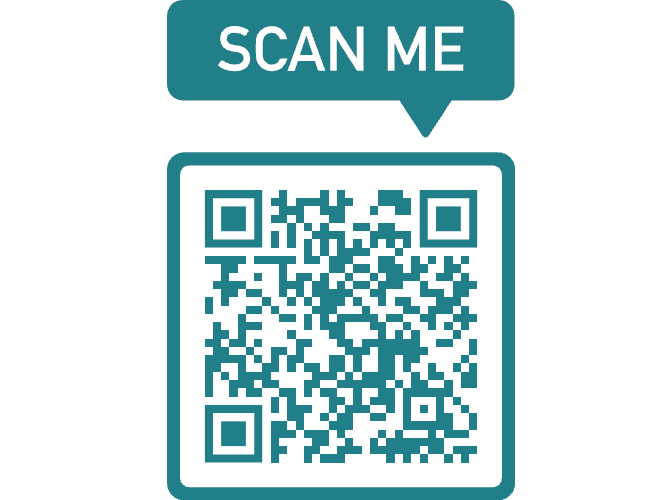
To join the SAALT SIG Community you can scan the QR code below, or click on the WhatsApp link for the specific SIG you are interested in.
Academic Writing
During our conference last year, we discussed opportunities for the coming year. We shared ideas on how we can collaborate and promote best practices among members who are interested in academic writing. One of the initiatives we would like to launch is to build an online bibliography of publications on academic writing. If there are members who are willing to participate and would like to share their research with us, please send an email to info@saalt.org.za.
You are also welcome to join the Academic Writing WhatsApp Group simply by clicking here.
Assessment and Testing
The past few months have been quite exciting for our Assessment and Testing SIG. We have successfully delivered three webinars as part of the series Assess smart with Albert. We would like to thank Prof. Albert Weideman for availing himself for these webinars. These webinars are available on our website at https://saalt.org.za/webinars/ This SIG also forms part of the Network of Expertise for Language Assessment (NExLA). For more information visit: https://nexla.org.za/
You are also welcome to join the SAALT Assessment and Testing WhatsApp Group simply by clicking here.
African Languages: Teaching the African Way
The Special Interest Group (SIG) on African Languages: Teaching the African Way is dedicated to advancing the teaching and learning of African languages in ways that affirm their cultural, linguistic, and pedagogical richness. The SIG provides a collaborative platform for educators, researchers, and practitioners to share innovative methodologies, grounded in African worldviews, that respond to the realities of multilingual classrooms. By promoting African languages as both subjects and mediums of instruction, the group seeks to strengthen literacy, preserve cultural heritage, and contribute to educational transformation in South Africa.
We are therefore inviting you to join this group to advance our African language education.
To join our WhatsApp group click here
Addressing Diverse Multilingual Classroom Realities
Through our Special Interest Group (SIG) on Addressing Diverse Multilingual Classroom Realities, we aim to create a community of practice among the lecturers, teachers, departmental officials and members of NGOs who celebrate our language diversity in South Africa and who view language as a resource and a responsibility. We would like to collaborate on projects to celebrate the wealth of our language repertoires and find innovative ways in which to develop and support all the languages in South Africa and to share research and best practices on how languages can be harnessed to promote learning
To join our WhatsApp group click here
Advancements in Technology: Language Teaching and Assessment
The Advancements in Technology: Language Teaching and Assessment Special Interest Group (SIG) is one of the exciting SAALT SIGs through which we aim to foster a forward-thinking community of practice—one that embraces innovation, critical dialogue, and collaborative exploration of digital tools in language education. Educators, researchers, and practitioners are welcome to join our WhatsApp community (click here), where updates, announcements, and entry points into our broader shared resource and collaboration space will be shared.